
March 26, 2026 at 03:43 AM
US Court Rejects Crypto Dev's Suit Over Money Transmitter Laws
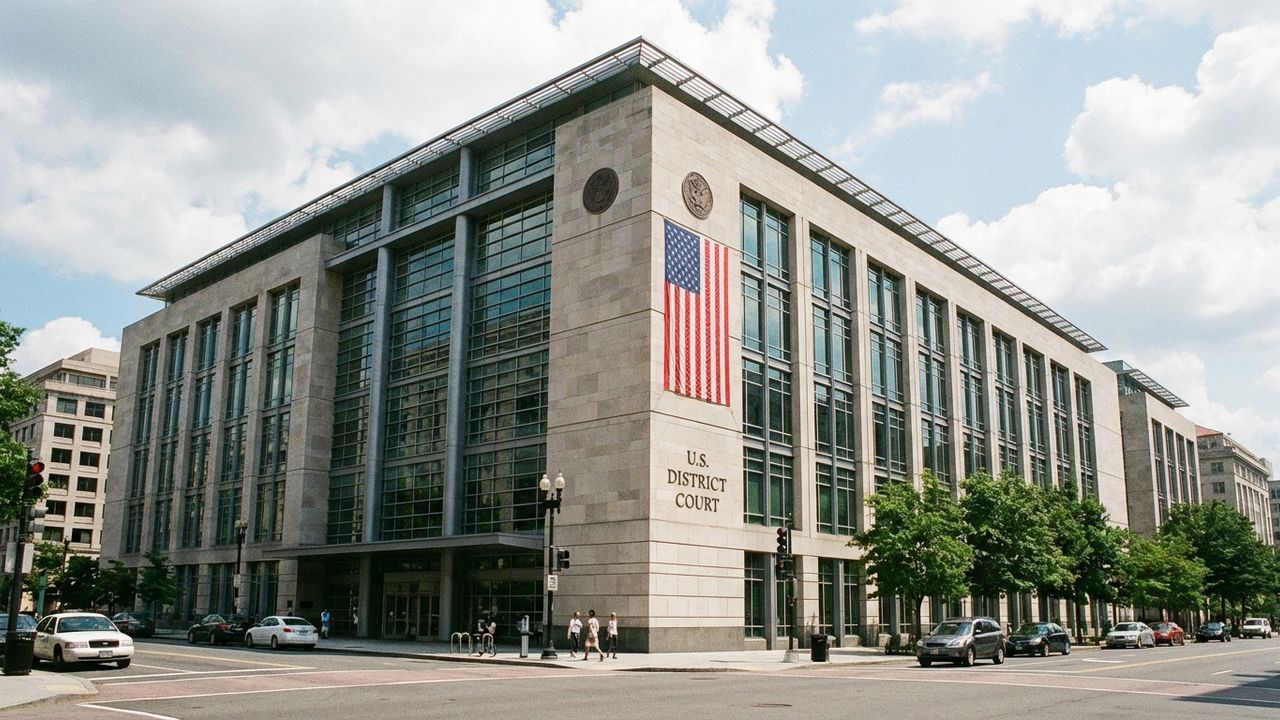
- Chief US District Judge Reed O’Connor dismissed a lawsuit by developer Michael Lewellen seeking a declaration that his software, Pharos, does not violate money-transmission laws.
- The court ruled that Lewellen failed to demonstrate a "credible threat of imminent prosecution," partly due to a Department of Justice (DOJ) memo regarding non-custodial software.
- Advocacy group Coin Center and Lewellen argue that recent convictions of developers for Tornado Cash and Samourai Wallet prove that software creators remain at significant legal risk.
Judicial Rejection of Declaratory Judgment
A federal court in Texas has dismissed a legal challenge brought by cryptocurrency developer Michael Lewellen. The lawsuit sought a proactive ruling that his software, Pharos—designed to facilitate donations for charitable crowdfunding—would not trigger criminal liability under federal money-transmission regulations. Chief US District Judge Reed O’Connor issued the dismissal on Wednesday, stating that Lewellen had not provided sufficient evidence that he was facing an immediate or likely threat of legal action from the government.
The case was dismissed without prejudice, a legal status that allows Lewellen to potentially revise and refile the suit in the future. Despite the dismissal, the developer expressed disappointment, noting that the lack of a clear ruling leaves software creators in a state of legal ambiguity.
The DOJ Memo and Precedent Cases
In reaching the decision, the court highlighted a non-binding Department of Justice memorandum. This document suggests that the DOJ will not target virtual currency exchanges, mixing services, or developers for the unauthorized actions of their users or for unintentional regulatory violations. However, Lewellen and his legal team from Coin Center argued that such a memo offers no genuine legal certainty compared to formal statutes.
To demonstrate the reality of the threat, the complaint cited several high-profile legal actions against other privacy-focused software developers:
- Roman Storm, a co-founder of Tornado Cash, was convicted on charges related to operating an unlicensed money-transmitting business.
- The founders of Samourai Wallet faced similar convictions for their non-custodial Bitcoin wallet services.
Judge O’Connor distinguished these cases by arguing that the "core conduct" in those instances involved active money laundering. He noted that Lewellen specifically disclaims any knowledge of transmitting criminal funds, which the judge viewed as a key distinction from the cited prosecutions.
Legislative Goals and Future Outlook
Following the court’s decision, industry advocates are turning their attention toward legislative remedies. Peter Van Valkenburgh, executive director of Coin Center, emphasized that the DOJ memo cited by the judge is a "vague enforcement signal" rather than a permanent limit on government power. He argued that the outcomes for Tornado Cash and Samourai Wallet show that developers are still vulnerable.
Both Lewellen and Coin Center are now advocating for the passage of the Blockchain Regulatory Certainty Act of 2026. Introduced by Senator Cynthia Lummis in January, this bill aims to provide a clear legal framework by:
- Clarifying that developers of non-custodial software are not money transmitters.
- Ensuring that providers who do not control user funds are exempt from certain financial regulations.
- Establishing a durable legal boundary to protect innovation within the cryptocurrency sector.
What is the market reaction?
0 Comments
No comments yet
Be the first to comment